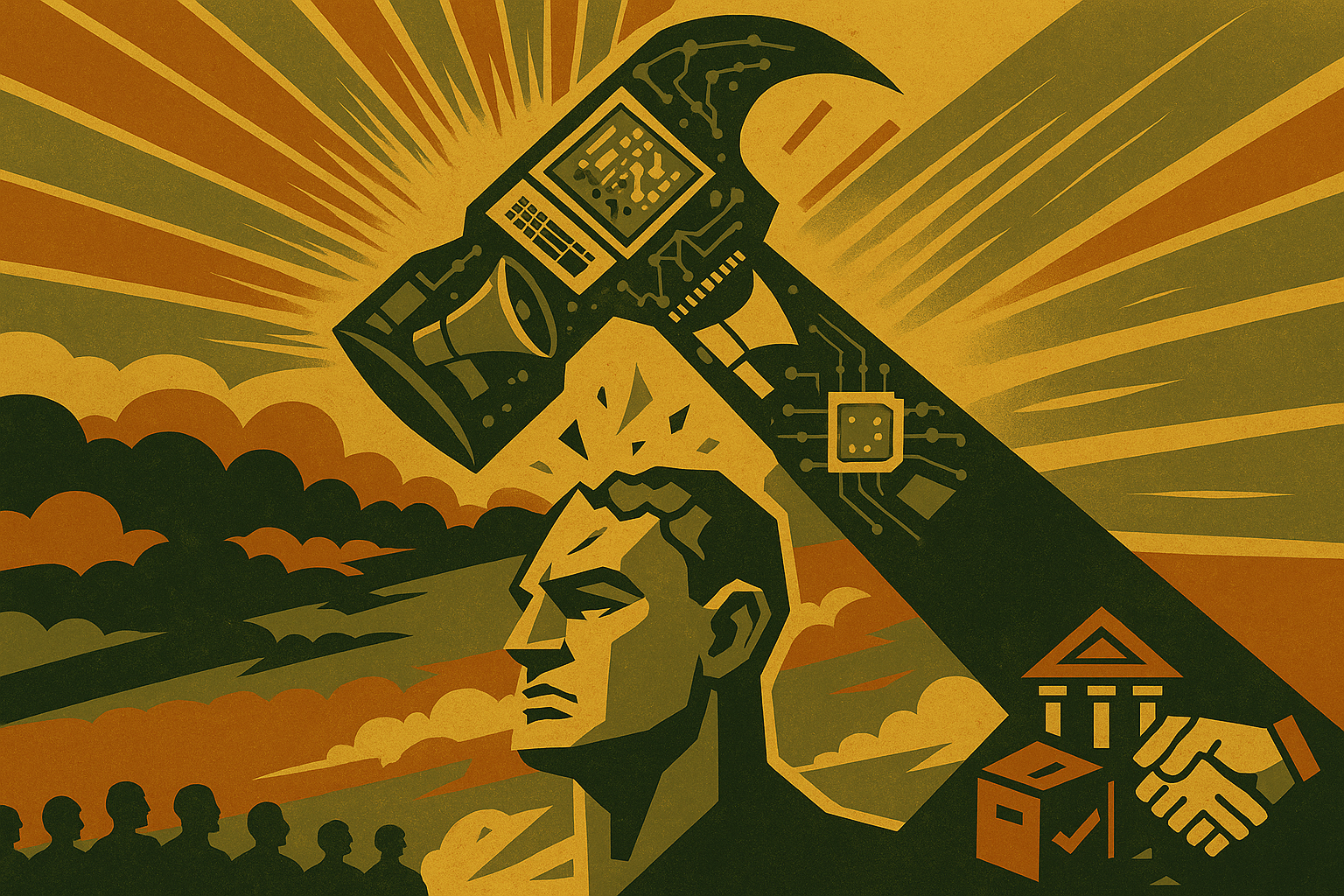
Despite its introduction over a decade ago by the People’s Liberation Army, there is no common understanding of Cognitive Warfare. Nor is there an agreement on the existence of a human or cognitive domain. These concepts compete in a crowded and confusing field centered around information technology and the related information dimension of statecraft.
While the US intelligence community notes the increasing prevalence of Chinese concepts and research for what they term Cognitive Domain Operations (as well as active Russian activities), there is little appreciation for the implications of Cognitive Warfare in the US military as described by the pacing threat.
Scholars have generated numerous labels to capture the ongoing evolution of information technologies as a vector to influence decision-makers and impact public opinion. See Figure 1 for a partial list. Recently, US government agencies have been using Foreign Malign Influence or just Influence Operations to address the threat.[1] RAND has published studies on cyber-enabled Influence Operations, Virtual Societal Warfare, and Next Generation Psychological Warfare to capture the contest in the information environment.[2] Related studies on Russian disinformation are also common, and with overlapping definitions.
War in the future will not be “wars of attrition but wars of cognition.”
Now the concept of Cognitive Warfare is competing in this crowded space, with no accepted definition or understanding of how it fits within the national security agenda. While information and narratives have shaped wars in the past, ongoing technological developments provide extremely efficient tools to expand this battlespace and substantially raise the potential and salience of Cognitive Warfare. New communication tools now offer infinite possibilities for digital distortion, opening the way to achieving desired objectives in opponents’ minds. Key competitors from autocratic states are not content to merely control their own population; instead, they have “weaponized” social media with “algorithmic amplification” against Western societies.[3] In the words of one expert, war in the future will not be “wars of attrition but wars of cognition.”[4] The joint warfighting community is aware of the challenge, but the national security community is reducing its ability to monitor and respond effectively.
RTWT @ Small Wars Journal