Minnesota’s Somali community has been treated for years as a political talking point rather than a population that deserves honest evaluation. Minnesota Governor Tim Walz insists the community poses no financial or public-safety burden. Democrats frame all criticism as racism.
But the numbers tell a different story—one that Minnesotans have been asked to ignore even as the state confronted one of the largest welfare-fraud schemes in U.S. history.
Federal prosecutors uncovered a $250–$300 million network of falsified child-nutrition and Medicaid claims, much of it operating through organizations rooted in Somali enclaves.
The total fraud is now estimated by some to exceed $1 billion. The scandal reflects deeper structural problems tied to human-capital realities that Democrats refuse to acknowledge.
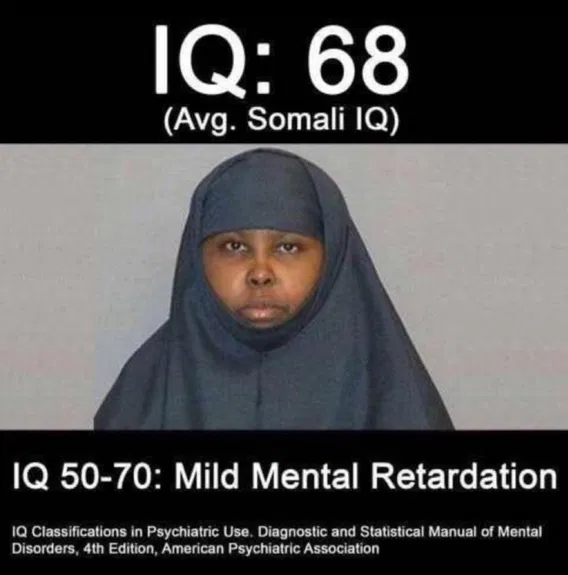
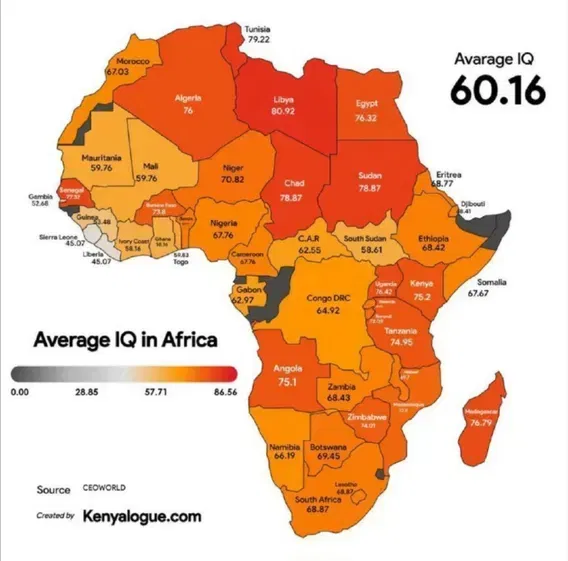
Somalia’s average IQ is estimated at around 68, placing it within the range typically used to classify significant cognitive-skill deficits.
While these estimates come from international intelligence and psychometric surveys rather than U.S. agencies, they illustrate the same underlying point reflected in all recognized human-capital measures: Somalia faces extraordinary developmental challenges.
When a country’s literacy rates, schooling years, and cognitive-skill indicators all rank near the lowest in the world, it is unrealistic to assume its refugee populations will seamlessly integrate into high-skill, high-productivity economies without substantial cost and long adjustment periods.