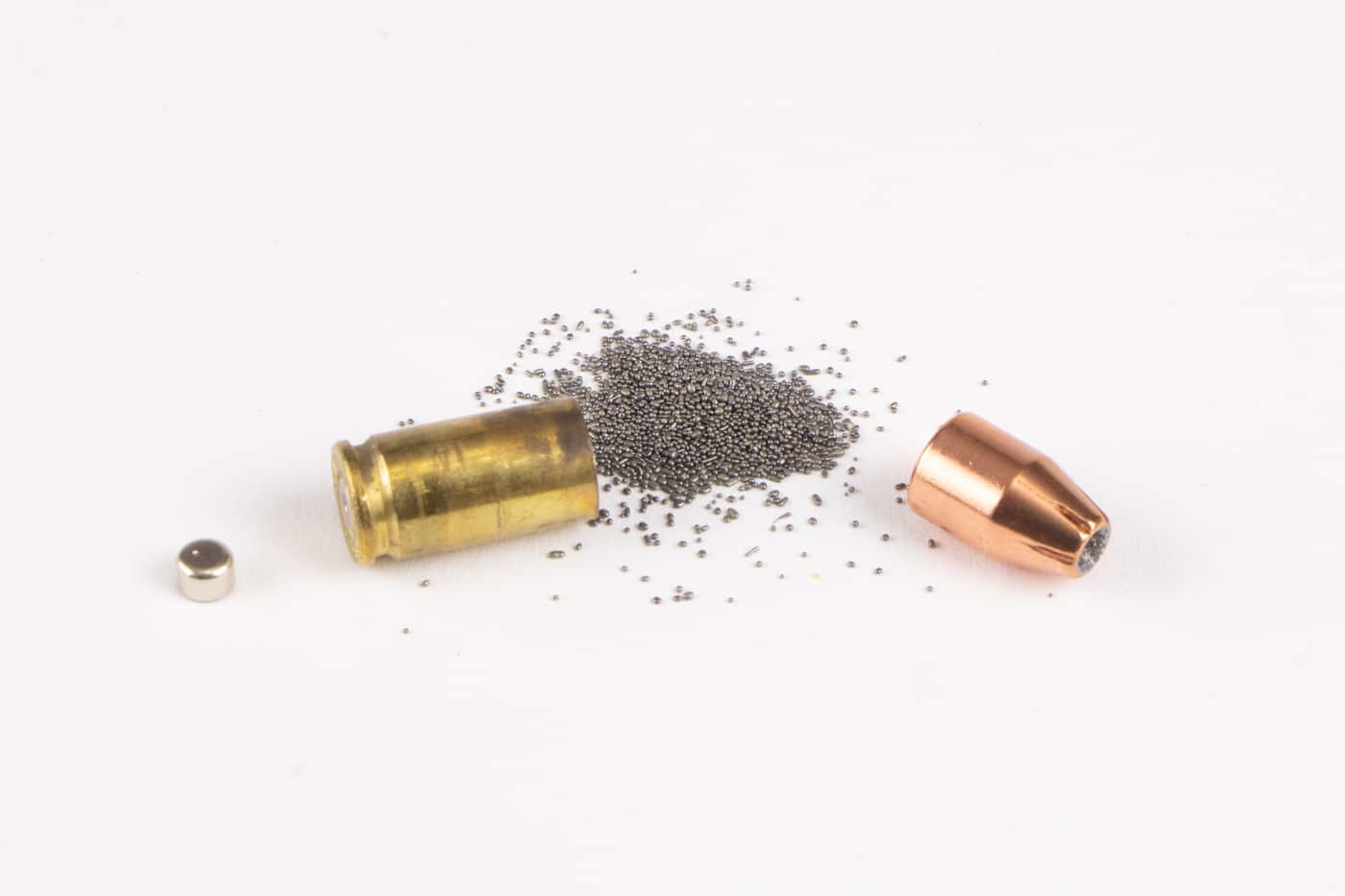
The term “corrosive ammo” will cause many shooters to cringe at the thought of using it, believing that it will eat the blue off their firearm before leaving the range. While it’s not quite that bad, you’ll need a little information to understand the difference between corrosive and non-corrosive ammo.
With the majority of corrosive loads, the primer — not the powder — is the source of your problems.
Let’s review the identification and effects, as well as the pros and cons of corrosive and non-corrosive ammunition on your firearm.
All About the Primer
While the ammunition propellant itself is not likely corrosive, certain types of primers are. Berdan primers are corrosive because they contain salts such as potassium chlorate or sodium perchlorate. When this type of primer is ignited, it leaves a residue of corrosive salts in the bore and chamber.
Common cartridges consist of four components. The primer is your main concern when you are wanting to avoid corrosive ammunition. The good news is most modern cartridges are non-corrosive.
While these salts are not corrosive by themselves, they will attract water from the humidity in the air, which can — actually, will — cause rust and damage your firearm if left uncleaned. It may also lead to safety issues over time, as the corrosion can weaken the firearm’s structural integrity. This may cause malfunctions or even a catastrophic failure.