Skip to content
A Savage Snow War
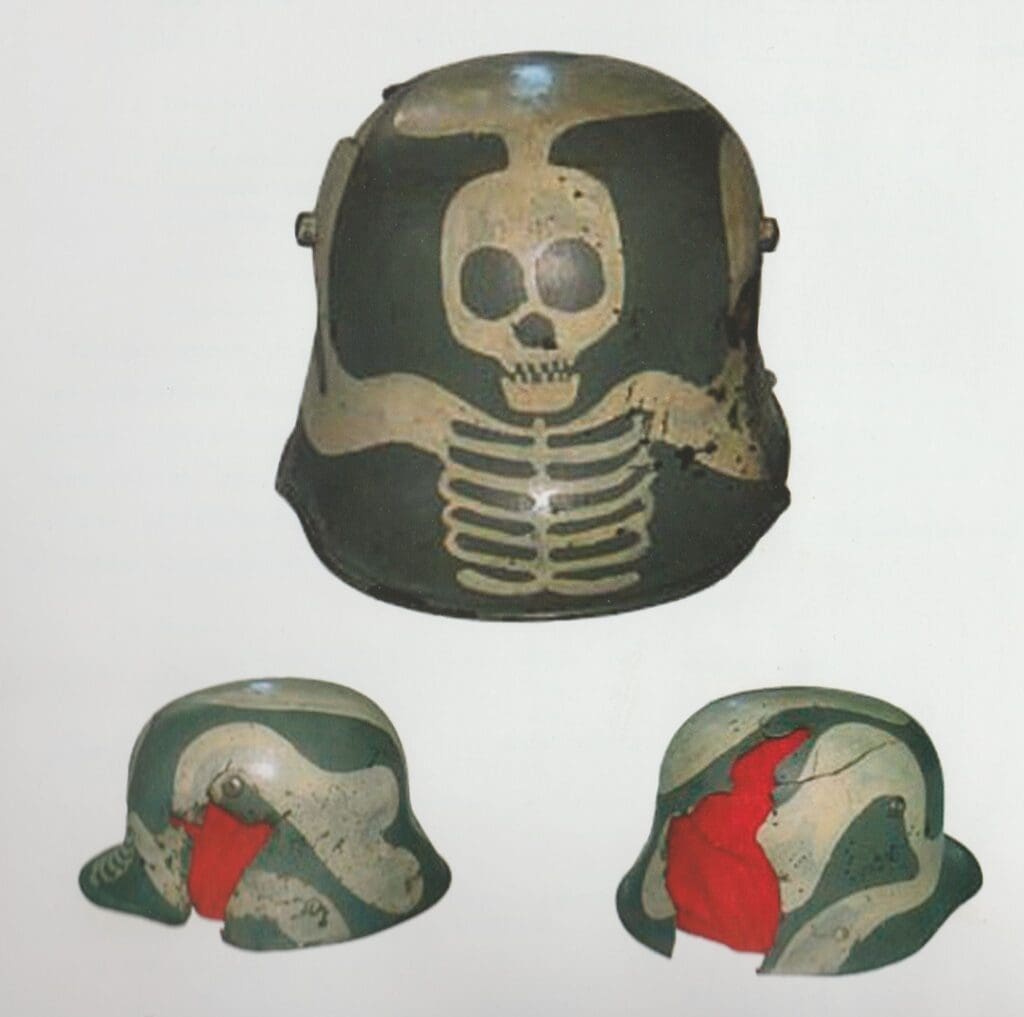
On a freezing day in January 1940, near the village of Muurila, a Red Army soldier crept through the snow. He placed himself as close to a tent, as he dared; he knew it contained his Finnish enemy. He lobbed his grenade and waited for the consequences to unfold. This hostile action was a small part of the so-called Winter War. Since November 1939, the Soviet Red Army had been fighting a vicious war of domination with the neighboring country Finland. Inside the tent was Captain Ryandall Nybom, one of the officers leading the Finnish army unit Kevyt Osasto 4. Nybom was conferring with a courier who had been sent to deliver a message. The grenade exploded in close proximity to Nybom, the concussion blew off the side panels of the old Great War era German M16 helmet he was wearing and lodged shrapnel in his shin. Though dazed and wounded Nybom would survive. The old helmet had done its job. Sadly, the courier was not as fortunate. He died moments later in Nybom’s arms as the captain, though badly injured, tried to comfort him in his last moments.
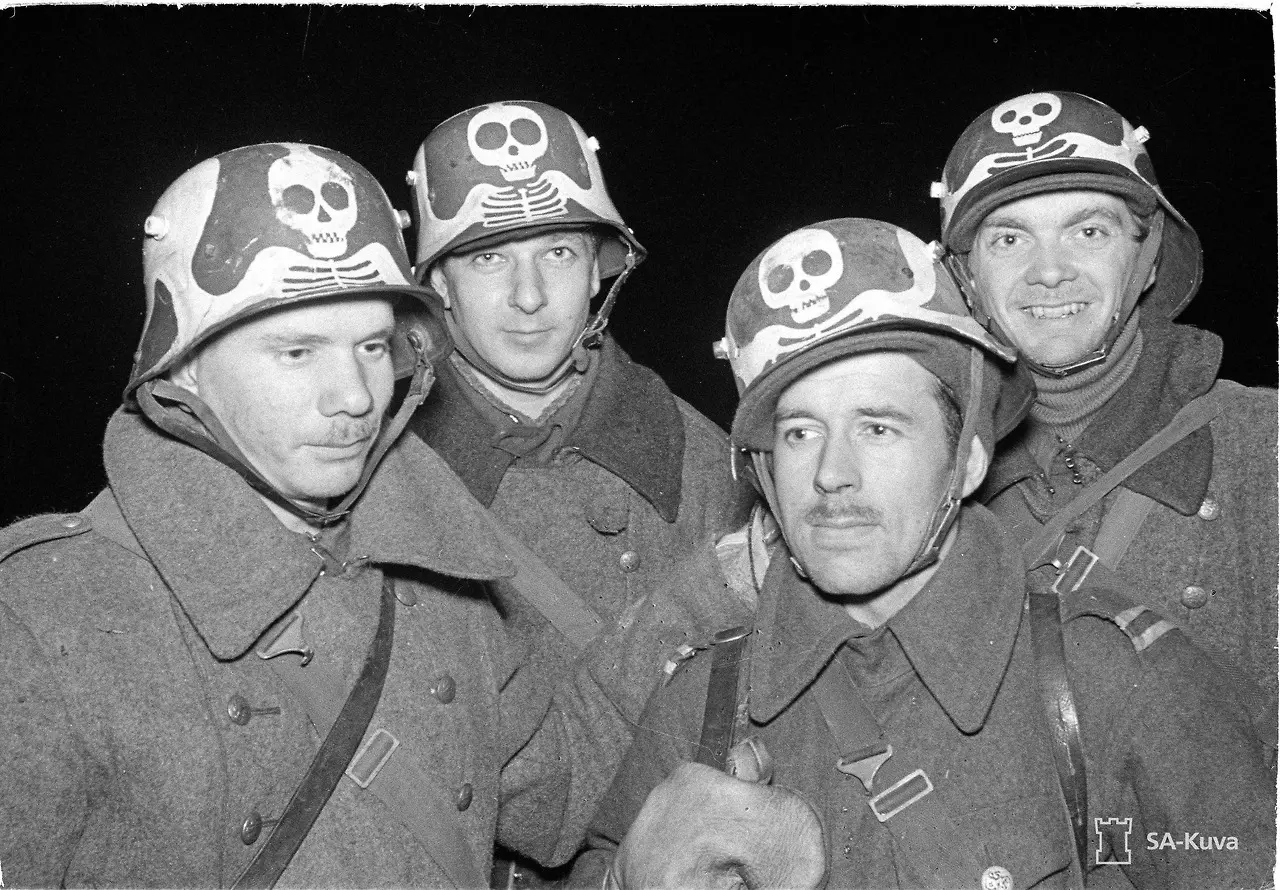
Captain Nybom’s helmet was emblazed with a ghoulish skeleton, hand rendered on the front, in white paint. Along the sides of the helmet were stylized swirls running down both panels emanating from the skeleton’s arms. The fantastic camouflage design was not unique to Nybom, in fact, the pattern was adopted by the entire unit. Today, to some degree, this unique camouflage pattern has become a symbol of the Finnish army during the Winter War.